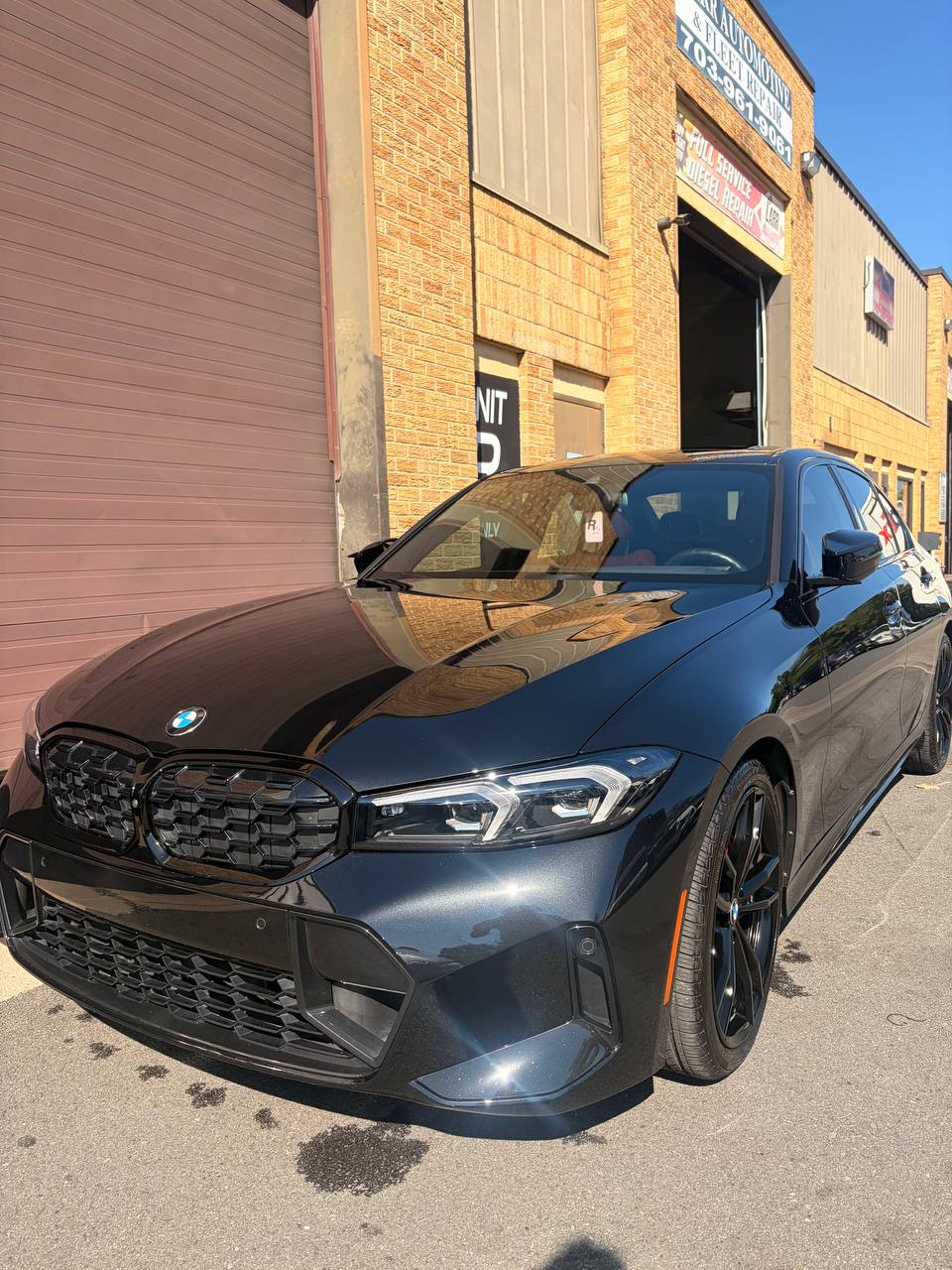
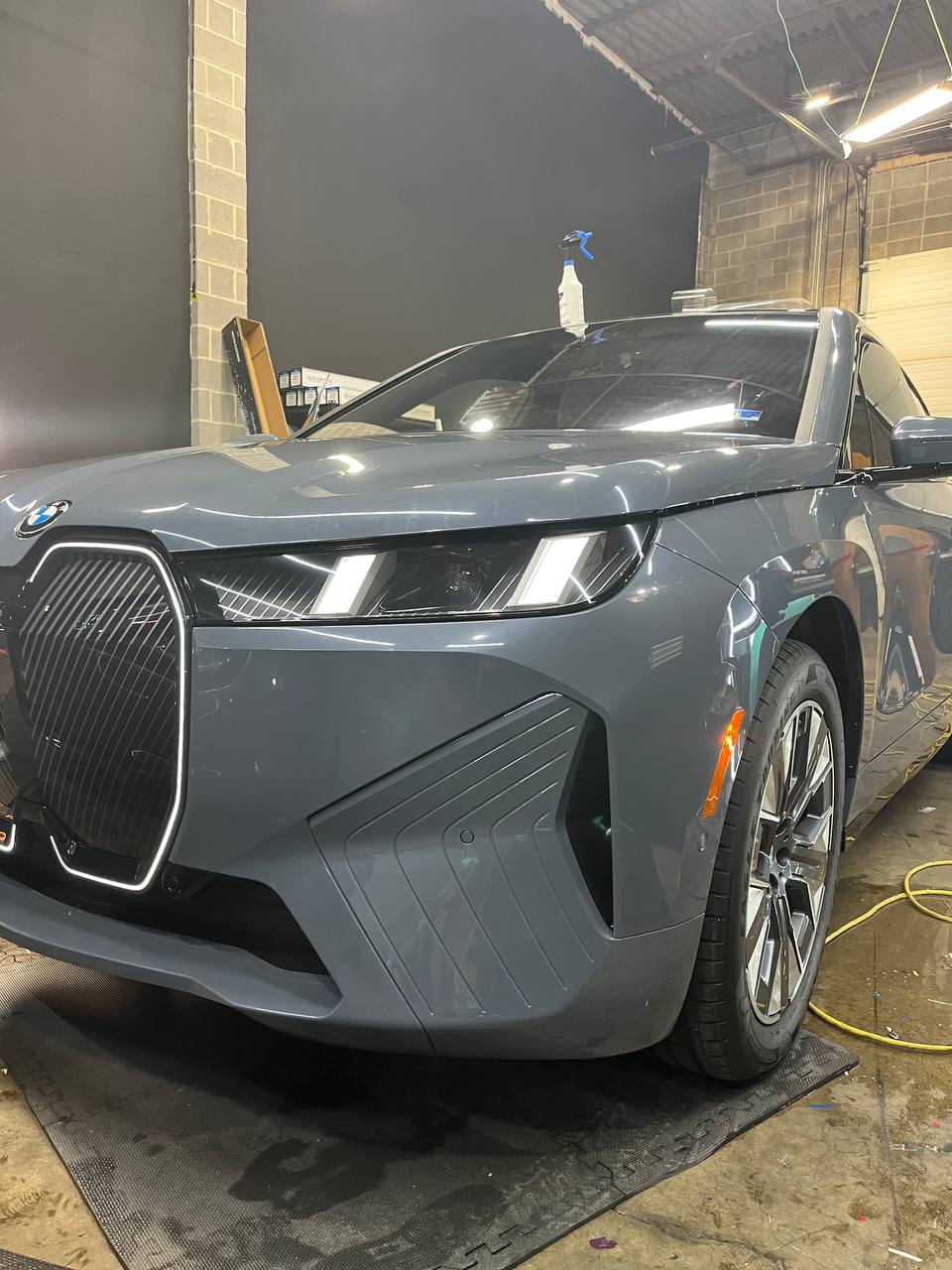
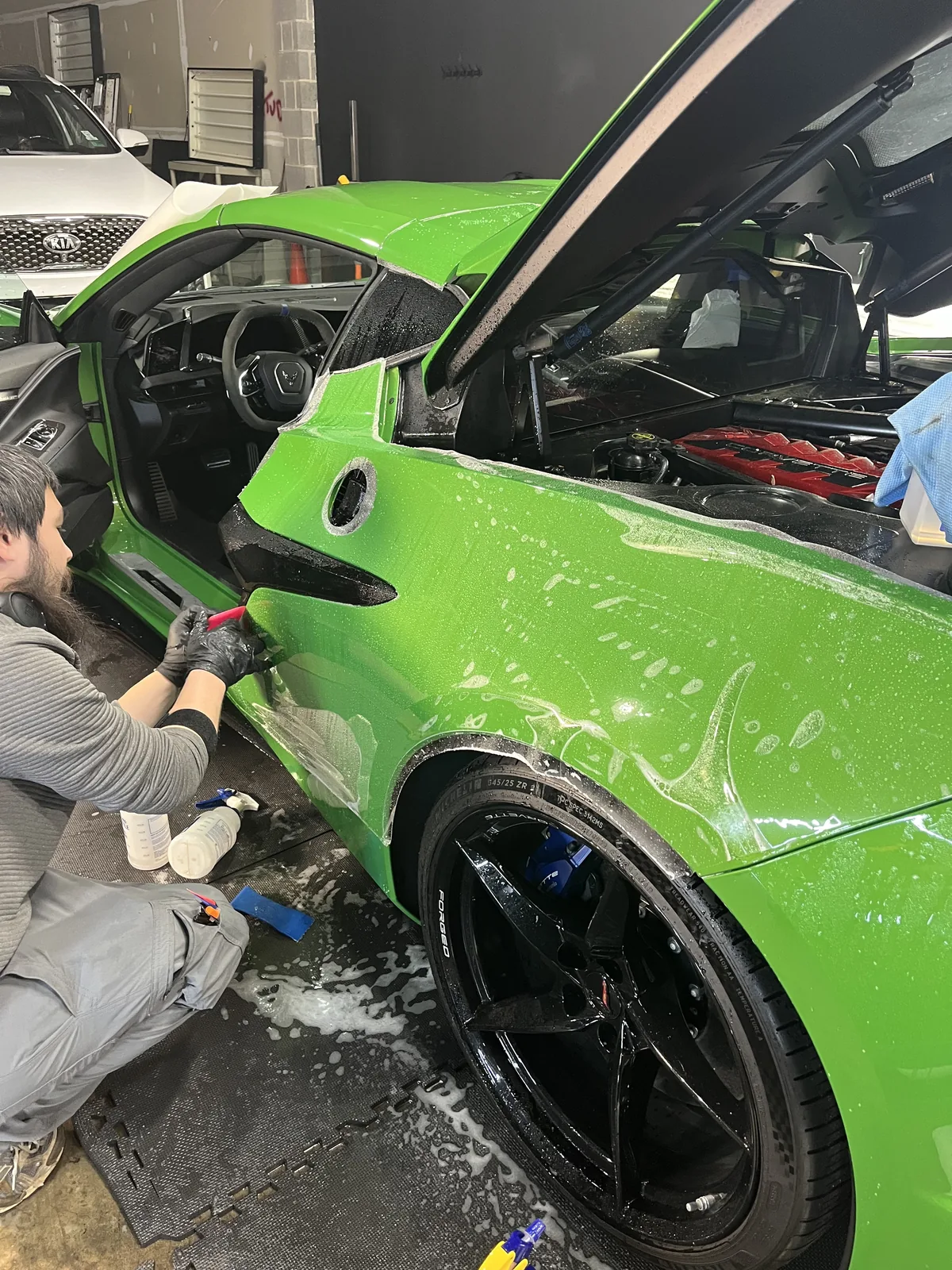
The honest list is short. Paint protection film costs more up front than a ceramic coating, it protects only the panels it covers, it cannot hide chips that are already in the paint, it wants hand washing instead of brush car washes, and a poor install shows. That last one is the real disadvantage, and it is the one most people never hear about until the film is already on the car. We install STEK DYNOshield every day at Skyline Customs in Chantilly, and we see both sides: film we laid years ago that still looks new, and other shops' film lifting at the edges. Here is each drawback, straight, and what actually fixes it.
Quick answer
- PPF costs more up front than a coating, covers only the panels you choose, and will not hide chips that are already there.
- Film wants a hand wash or a touchless wash. Brush car washes drag grit across it and can catch an edge.
- The real disadvantage is a bad install: hand-cut seams, dirt under the film, lifted edges, and bulk film that yellows. Computer-cut STEK patterns and a certified installer solve it.
The four trade-offs everyone talks about
It costs more up front than a coating
A ceramic coating is a liquid that wipes on in an afternoon. PPF is a thick sheet of urethane that has to be patterned, cut, and set onto each panel by hand, and a full front takes a full day in the bay. So yes, the invoice is bigger. The fair comparison is what each one does. A coating adds gloss and stops zero impacts. Film physically absorbs the stone. One chipped bumper means a repaint that never quite matches. Pricing depends on how much you cover and how big the car is, and we answer every free quote with an exact number, usually within the hour. What drives PPF pricing breaks it down. Klarna, Afterpay, and Affirm payment plans are available.
It only protects the panels it covers
Film on a bumper stops chips on the bumper. It does nothing for the hood above it. Partial front covers the bumper, the leading 18 inches of the hood, the fender edges, and the mirrors, and on surface streets that is usually enough. On I-66 or Route 28 at highway speed, stones land past that 18-inch line, right where you do not want a seam. The fix is to cover the panels that face forward. That is what full front PPF is: full hood, bumper, both fenders, mirrors, headlights, and A-pillars. If you drive gravel or park nose-in on rough lots, full front extended adds the rockers, door edges, and door cups.
It cannot hide chips that are already there
Film is optically clear, so whatever is under it stays visible. A chip under film is still a chip, now sealed in. If your hood already looks like it took a season of Dulles Toll Road gravel, the honest advice is touch-up or a repaint first, then film, or skip film and put the money toward paint. Every install at our shop starts with a decontamination wash and a paint inspection, and if we find damage we tell you first. The best time to film a car is the first weeks you own it. An EV like the BMW iX is a good example: thin factory paint and a bumper full of sensors, so the paint you protect on day one is the paint you keep.
It wants hand washing
Film does not like spinning brushes. The brushes drag grit across the top coat and can catch an edge. Touchless washes are fine once the film has cured for seven days. Hand washing is better: rinse first, two buckets, pH-neutral soap, a clean microfiber mitt, straight strokes, and keep the pressure washer tip a foot away from any edge. If you are a weekly brush-wash person and you are not going to change, that is a real trade-off and you should know it going in. The upside: the self-healing top coat on STEK DYNOshield relaxes light swirls out in the sun. How to wash and care for PPF has the full routine.
The real disadvantage: a bad install
Everything above is a trade-off you can see coming. A bad install is the one you cannot, because it looks fine on pickup day and goes wrong over the next few months. It almost always comes down to one of four things.
- Hand-cut seams. The installer lays bulk film on the car and trims it with a blade. You get visible lines across the hood and fenders, and a blade on your paint that scores the clear coat under the film.
- Dirt under the film. Specks trapped between film and paint look like chips, and they are there until the film comes off. They come from installing in an open bay with the door up.
- Lifted edges. Edges that were not wrapped or were not set with enough heat start to catch wax and dirt, turn gray, and peel. Once an edge lifts, it does not go back down.
- Bulk film that yellows. No-name film without a proper top coat yellows and stains in a couple of years, and leaves adhesive behind on removal.
Done right, you cannot find the film from three feet away. If you can, the install is the problem, not the film.
How a certified install removes each one
None of those four are properties of PPF. They are properties of a shortcut. Here is how a proper paint protection film install at Skyline Customs removes each one.
- Computer-cut STEK DYNOshield patterns for your exact year and model. The film is plotter-cut before it touches the car: no blade on your paint, no hand-cut seams. Edges are wrapped where the pattern allows, which keeps them from lifting.
- A dust-controlled bay. Every car gets a decontamination wash and paint inspection before film goes on, and the install happens with the doors closed. That is how you keep dirt out from under the film.
- STEK-certified technicians and a 12-year manufacturer warranty against yellowing, cracking, peeling, and delamination. Yellowing bulk film is not a risk you take with DYNOshield.
- A walk-around under high-intensity lighting before you pick up. If there is a speck or a lifted corner, we find it in the bay, not you in your driveway a month later.
That is the whole answer to the real disadvantage. Pick the installer the way you would pick a body shop, not the way you would pick a car wash. Our 5.0 Google rating with 140+ five-star reviews comes from people who did exactly that.
When PPF is honestly not worth it
We will tell you to skip it in three cases. You are selling the car in a few months. The paint is already chipped and faded. Or the car never leaves the garage. We would rather say so than film a car that does not need it. For a daily driver that runs I-66, Route 28, or the Beltway from Centreville, Herndon, or Ashburn and that you plan to keep more than a couple of years, the trade-offs above are small and the chips are not.
Get a straight answer and a free quote
Send us the year, make, model, and how you drive, and we will tell you which package fits, or tell you to hold off. Request a free quote from Skyline Customs at 4215 Walney Rd in Chantilly, VA, and you will have an exact price back, usually within the hour. We serve the whole DMV, Monday through Friday, 9 AM to 6 PM. Call (703) 775-4383 if you would rather talk it through at the counter.