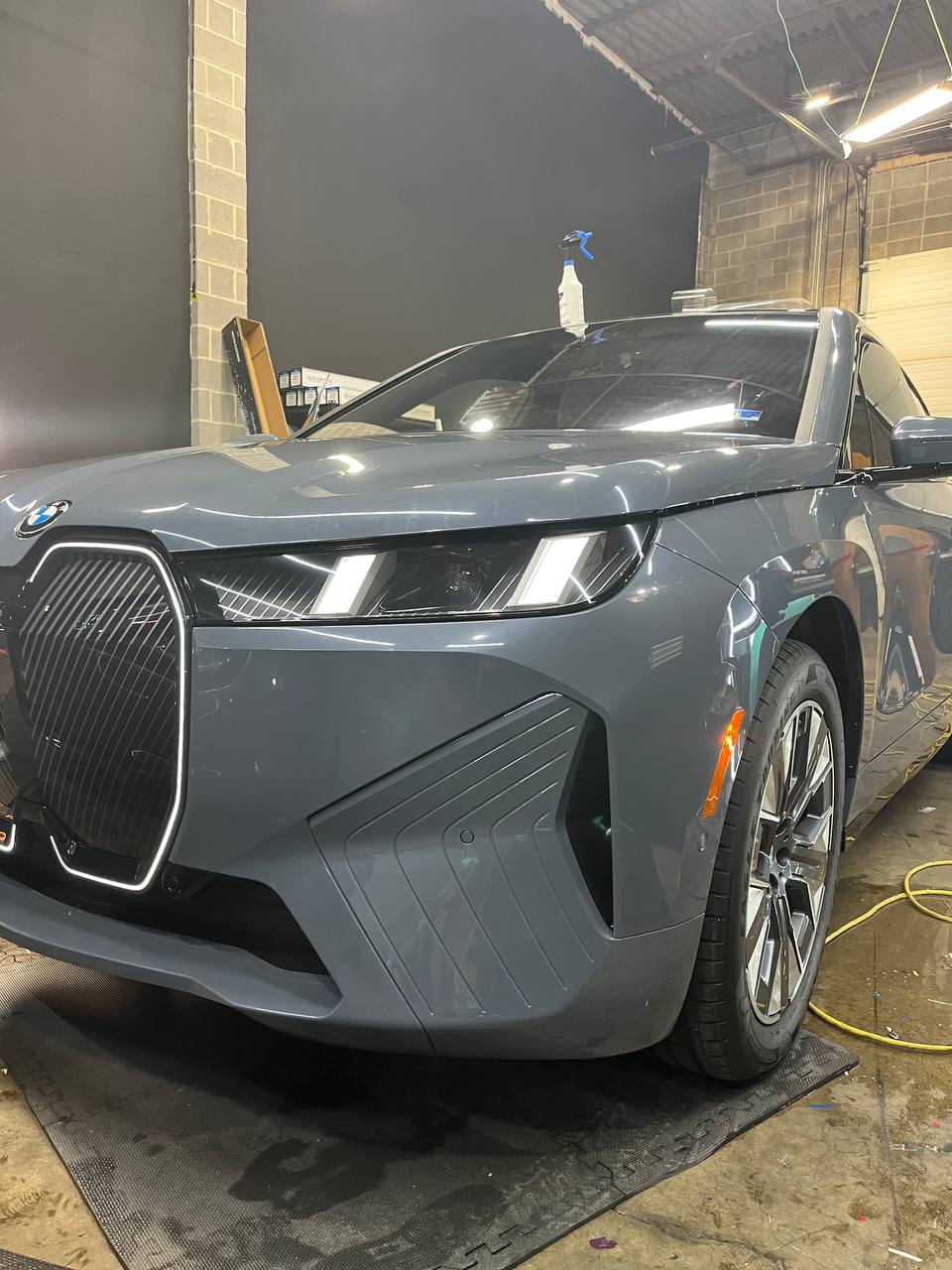
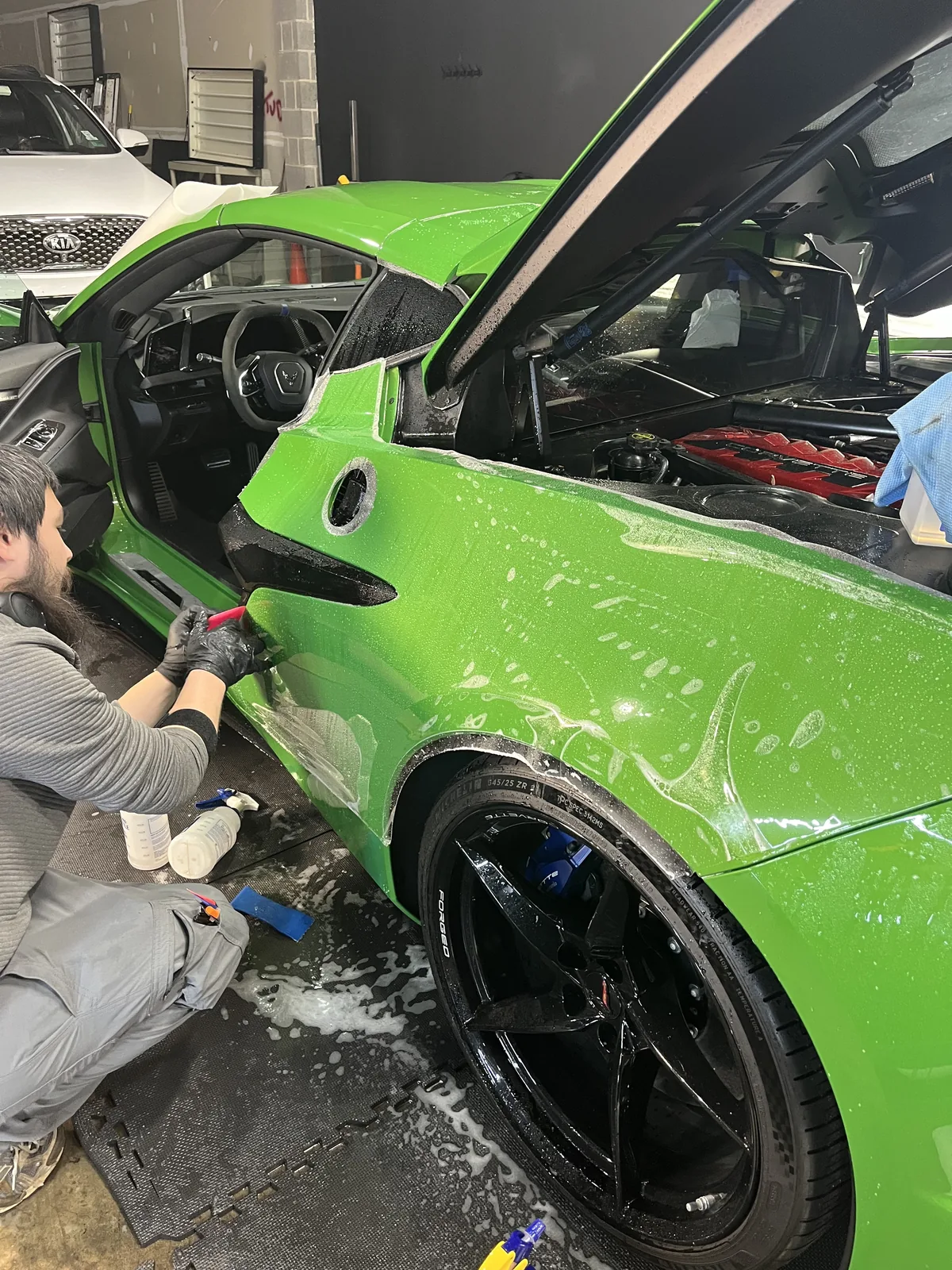
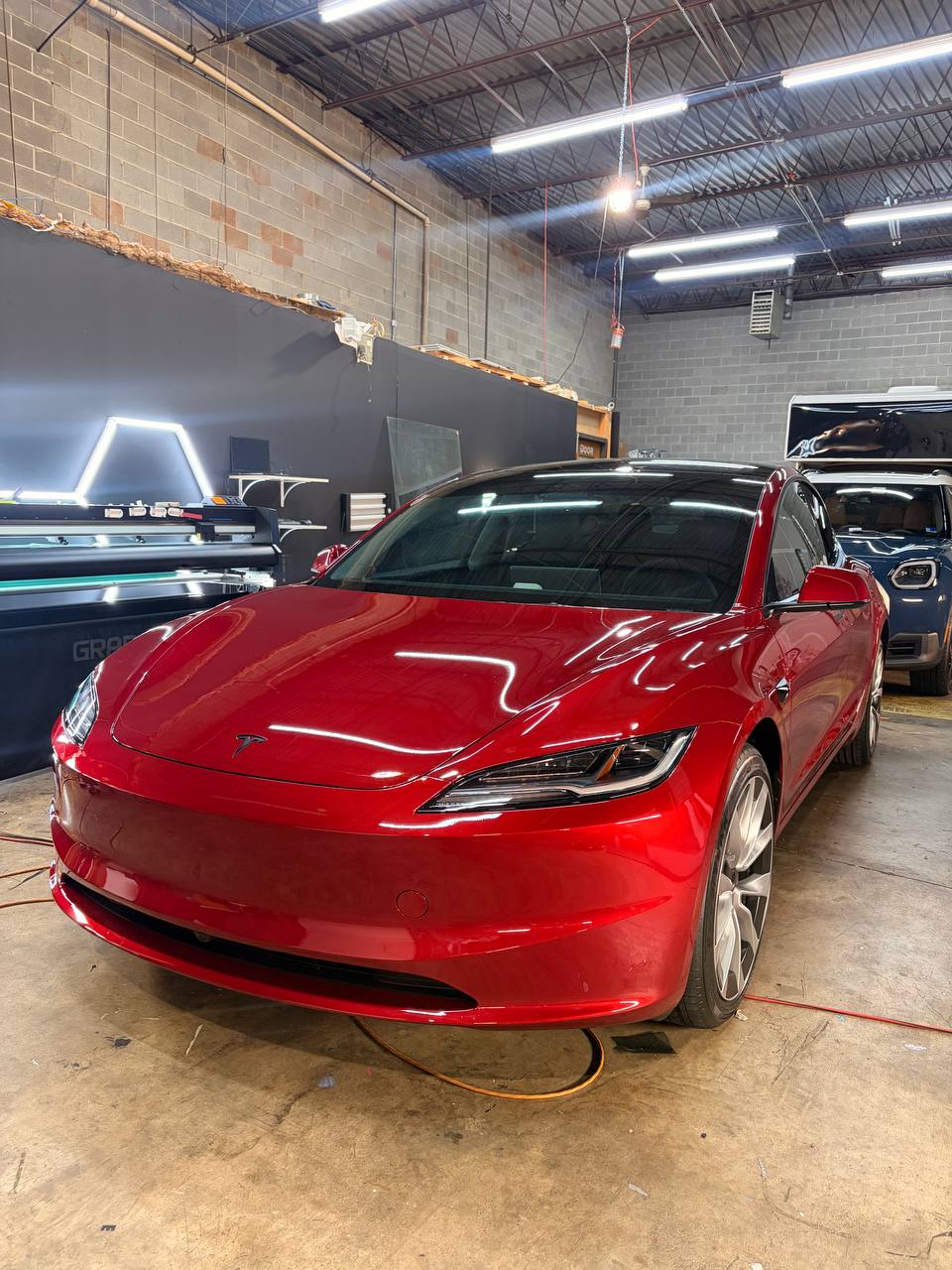
Full front, for almost every daily driver. Full body PPF covers every painted panel and is the most protection you can buy, but rock chips land on the hood, bumper, fenders, mirrors, and headlights, which is exactly what full front covers. The doors and the back half of the car take a small share of the impacts and mostly collect dings that no film stops. We install both at Skyline Customs in Chantilly, so this is not a shop talking up the only thing it sells. It is the advice we give at the counter, and the reason full front paint protection film is what most of our customers drive away with.
Quick answer
- Full front covers every surface that faces forward at highway speed, which is where nearly all rock chips land on a commuter.
- Full body adds doors, quarters, roof, trunk, and rear bumper for several times the film and labor, on panels that rarely take a stone.
- Full body makes sense for gravel and track use, soft or exotic paint on a keeper, and matte finishes. Everyone else should start with full front and add panels later if they want them.
Where the damage actually lands
Rock chips come from stones thrown by the tires of the vehicle ahead of you. On I-66 behind a dump truck leaving a Route 28 job site, or on the Dulles Toll Road in the right lane, those stones travel backward and slightly up, and they hit whatever faces them: the hood, the bumper cover, the fender tops, the mirror caps, and the headlights. That is the full front package, panel for panel. It is not a marketing bundle. It is a map of where the hits land.
Doors sit behind the front wheels and in the shadow of the mirrors. Quarter panels sit behind the doors. The roof and trunk face up and back. Those panels see a fraction of the stone strikes, and what they collect instead is parking-lot damage: door dings in the Tysons garage, a shopping cart at Wegmans, a scuffed rear bumper from bumper-to-bumper parking in Arlington or DC. Film does not stop a dent, and a scuffed bumper cover is a repaint whether it has film on it or not.
We see this at pickup and again a year later, car after car. On a commuter, nearly every impact mark is on the front end. That is the whole case for full front in one sentence: it puts the film where the stones go.
What full body adds, and what it costs you in return
Full body PPF wraps every painted panel. On the panels it adds, the protection is real: a door with film on it shrugs off a key scratch and a belt buckle, and self-healing film keeps swirl marks off the quarters. The question is not whether the back half benefits. It is whether the benefit per dollar comes anywhere close to the front, and it does not.
- Several times the film and labor of full front, for panels that take a small share of the impacts. Pricing depends on the vehicle and the coverage, so we quote it exactly, but the ratio holds on every car we have done.
- Every added panel brings edges, relief cuts, and trim to work around: door handles, badges, the fuel door, window trim, the trunk seam. A good installer makes them disappear. They are still edges you are paying for on panels that rarely get hit.
- More film on the car means more surface to keep clean and more edges to keep a pressure washer away from. Full front keeps the care routine short.
- Nothing about full front is wasted if you later want more. STEK patterns exist for every panel, the film matches, and we add rockers, door edges, or whole doors to full front cars all the time.
The combination most of our customers choose is full front film plus a Gtechniq ceramic coating over the entire car. The front is protected from stones where stones land. The rest of the car gets the gloss, the chemical resistance, and the easy washing of a coating. For a daily driver, that pairing covers the real risks without paying to film panels that spend their lives in a garage or a parking space. The PPF vs ceramic coating comparison goes deeper on what each layer does.
Film goes where the stones go. On a commuter that is the front, and the front is where your money works hardest.
When full body is the right call
We are not against full body. We install it, and we install it well. These are the cars where it earns its keep:
- A car that sees gravel roads, a long unpaved driveway out past Haymarket or Purcellville, or track days, where stones hit the sides and rear as well as the front.
- Soft or exotic paint on a car you plan to keep for a decade and want flawless on every panel. Some paints chip from a fingernail; those owners want everything covered.
- A matte or satin factory finish. A scratch on matte paint cannot be polished out, so film on every panel is the only way to keep the finish uniform.
- You want everything covered and the budget is not the deciding factor. That is a fine reason, and we will do it right.
- You won it. Every completed Fall Special full front job is entered to win a full body install, so full front is also your ticket into the drawing.
Partial front, full front, or extended?
If you have ruled out full body and are now choosing between the front packages, the line falls at how you drive. Partial front covers the bumper, the leading 18 inches of the hood, the fender edges, and the mirrors, and it is enough for a car that lives on surface streets in Fairfax or Vienna. Full front covers the whole hood, the bumper, both fenders, mirrors, headlights, and A-pillars, and it is what we recommend for anyone who commutes on I-66, Route 28, Route 7, or I-95, because at highway speed chips land past the 18-inch line. Full front extended adds the rocker panels and door edges for cars that see gravel or park nose-in on rough lots. The partial vs full front comparison walks through each one, and the complete full front PPF guide covers every panel, the film, and the install day.
How we quote it
Send us the year, make, and model and tell us how you drive. A Tesla Model Y that commutes the Beltway gets a different recommendation from a Corvette that sees two track days a year. We reply with an exact price for the coverage that fits, usually within the hour, with no pressure to go bigger. A fully refundable 20% deposit holds your install date, and Klarna, Afterpay, and Affirm are available if you want to split the cost.
Get a full front PPF quote in Chantilly
Skyline Customs installs STEK DYNOshield full front PPF in Chantilly, VA, a few minutes off Route 28 and I-66, for drivers from the whole DMV. STEK-certified installers, computer-cut patterns for your exact model, a dust-controlled bay, and a 12-year manufacturer warranty on the film. Start with the panels that take the hits. Request a free quote and we will tell you honestly whether your car needs more.