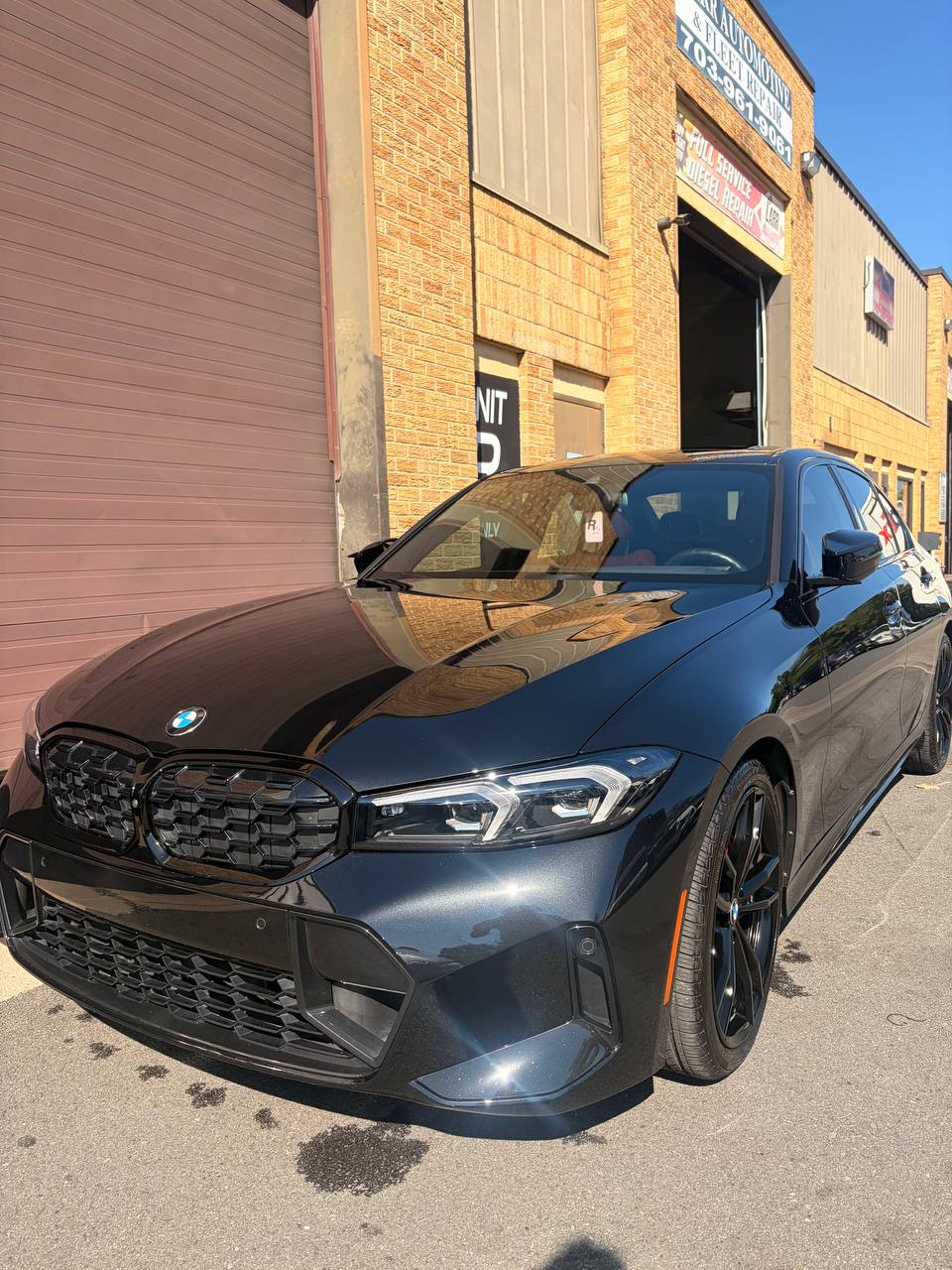
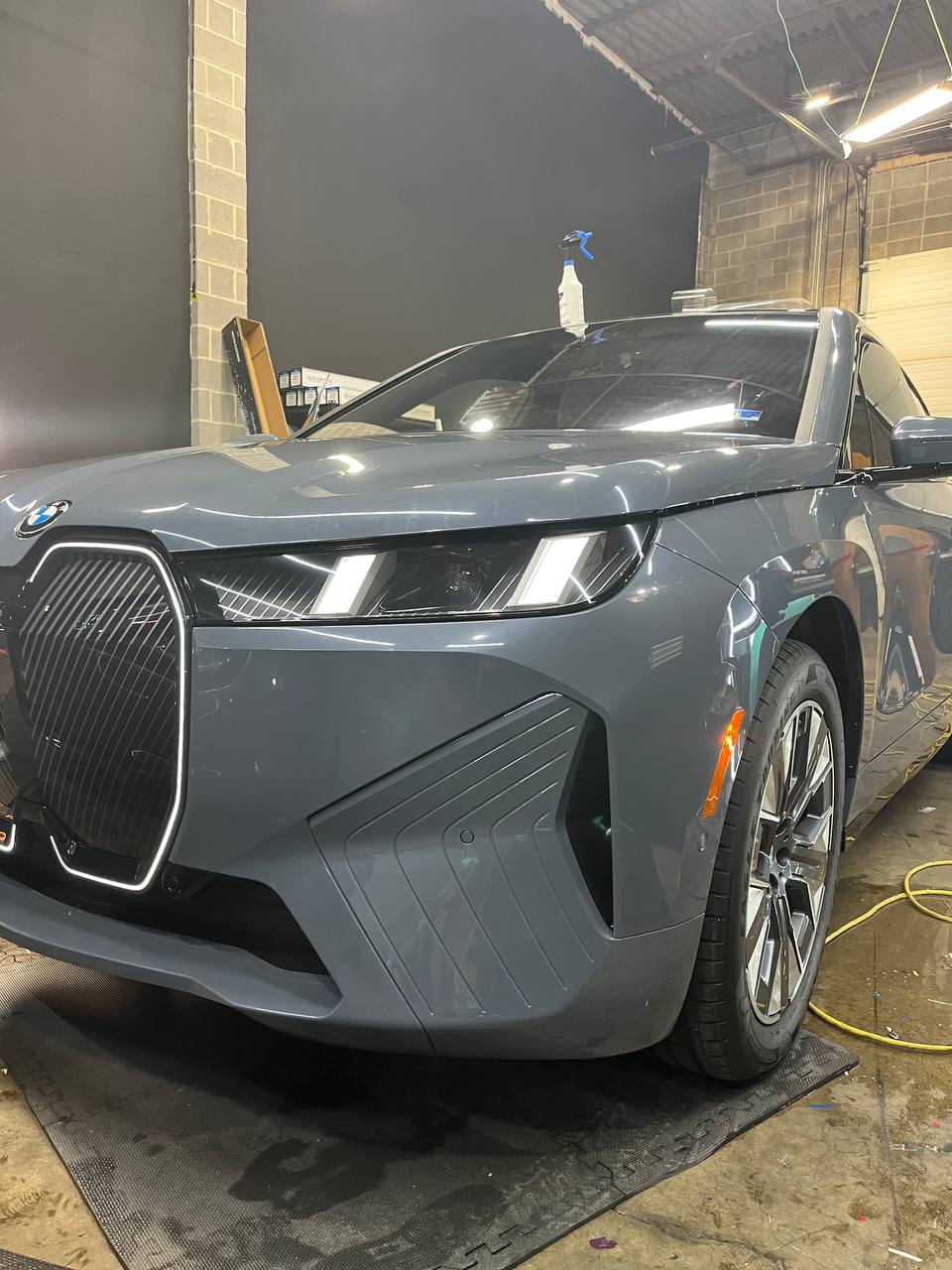
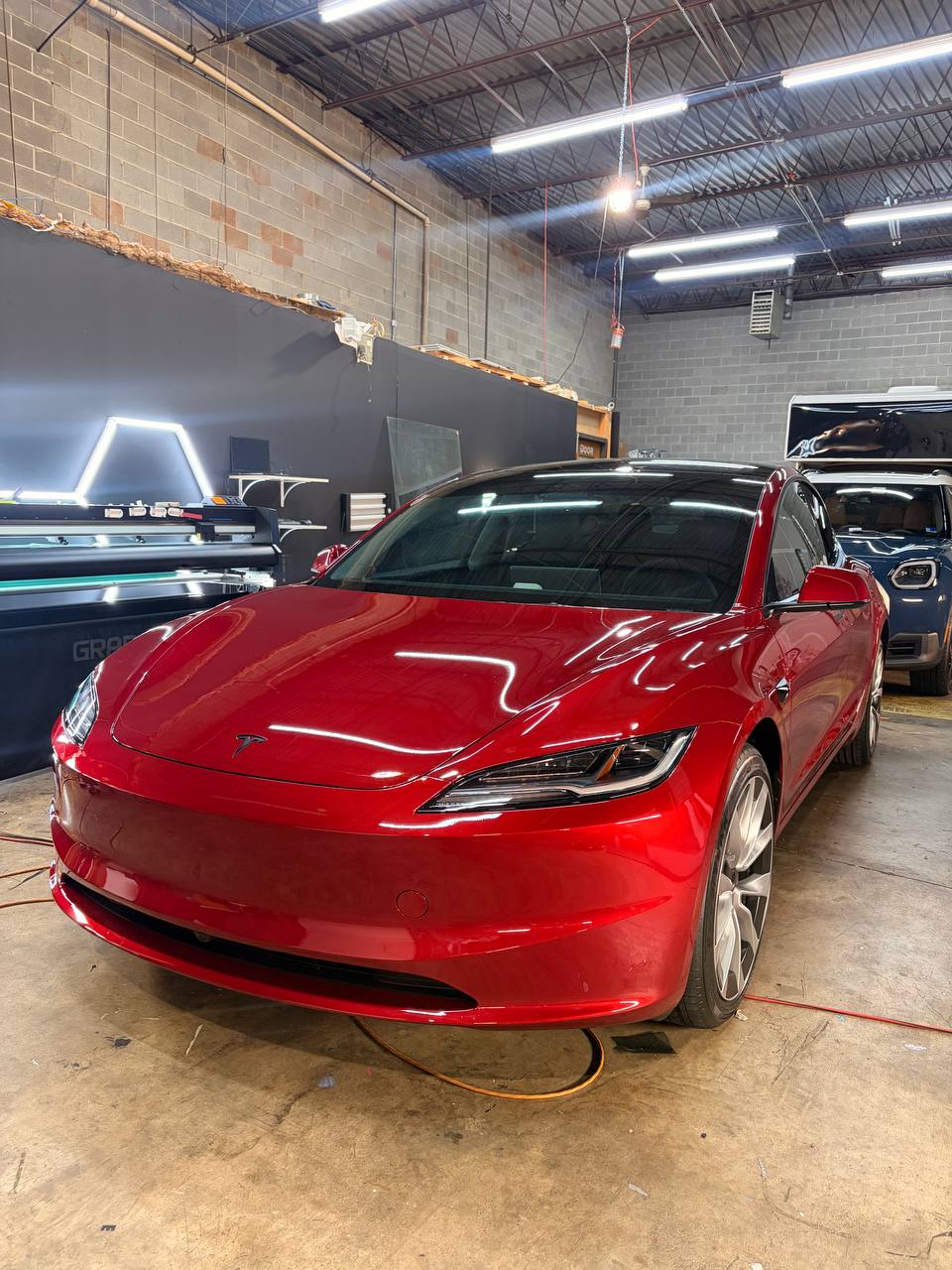
At ten years, STEK DYNOshield paint protection film should still be clear, still bonded, and still two years inside its 12-year warranty. If it has taken a decade of stones you will see pitting on the leading edges, and that is the film doing its job. What it should not show is yellow, cracks, or lifted corners. Here is the year-by-year timeline we give customers at the counter.
Quick answer
- At ten years, hand-washed STEK DYNOshield is still clear and bonded, with light pitting on the hood edge and bumper where stones hit.
- The 12-year warranty covers yellowing, cracking, peeling, and delamination. It does not cover rock chips in the film, because that is what the film is for.
- Old film comes off with heat, the factory paint under it is untouched, and a fresh set goes on the same panels.
Years one through five: the leading edges tell the story
A week after the install the film has cured and the edges are locked down. From the curb nobody can tell the car has film on it. The first stone that bounces off the bumper leaves a small white mark that fades by the afternoon, and most owners forget the film is there.
At five years it is still clear. The edges are still down and the self-healing still works. On a car that commutes I-66 or Route 28 every day, the front lip of the hood, the lower bumper, and the mirror caps will show small pits. Each one is a stone that would have gone into the clear coat. Instead it went into eight thousandths of an inch of urethane and stopped. Pitting is shallow and does not spread. We wrote a separate post on how long PPF lasts in Northern Virginia that covers what shortens or extends that number. This post is about what the end of the road looks like.
Year ten: still clear, still protecting, still under warranty
Here is a ten-year-old set of STEK DYNOshield on a hand-washed car. The film is clear. No yellow cast, no haze, no spider cracking at the edges. The adhesive is still bonded and the wrapped edges are still tucked. The leading edges have more pitting than they did at five, especially on a truck or SUV hood that sits high and flat, and there may be a spot or two where a big stone went through the film and left a divot. The paint under that divot is almost always fine, because the film took the energy before the stone got there.
The self-healing top coat is thinner at ten years than it was new. Light scratches still relax out in warm sun, but it takes longer and the deeper ones stay. That is the first real sign the film is nearing the end of its working life. It is not a failure. It is ten years of bugs, salt, and Route 50 gravel absorbed by a layer built to be sacrificial.
The film is supposed to look worse than the paint. That is the whole point. When it comes off, the paint looks like the day the car left the dealer.
What the 12-year warranty covers and what it does not
STEK backs DYNOshield for twelve years against yellowing, cracking, peeling, and delamination. If a panel turns yellow in year nine, or an edge lets go on its own, or the layers separate, that is a warranty claim and the panel is replaced.
The warranty does not cover impacts. A stone that punches through, a cut from a key or a bike pedal: those are the film doing what you bought it for, and replacing that panel is a service job, not a defect. It also does not cover damage from brush car washes, pressure-washer tips held against an edge, or solvent-heavy chemicals, which is why hand washing matters. A certified install is a condition of the warranty, and that is one reason we keep every car in a dust-controlled bay and only use computer-cut patterns for the exact year and model. Coverage and packages are on our paint protection film service page.
How old film comes off, and what is under it
Removal is heat and patience. A heat gun or steamer warms the film until the adhesive softens, then the installer lifts a corner and peels at a low angle, re-warming as the panel goes. Quality film comes off in large sheets, any adhesive left behind wipes off with a mild remover, and the panel gets a decontamination wash and paint inspection, the same way every new install starts.
What we find under a decade of STEK DYNOshield is factory paint with factory thickness. No chips, no sandblasting on the hood edge, no fading, because the film blocked UV as well as stones. Park it next to the same model that drove the same Beltway commute with no film and the difference is not subtle. The bare hood has a band of chips across the front eight inches, the bumper is peppered, and the mirror caps look shot-blasted. That car needs a bumper repaint that never quite matches. The filmed car gets a new set of film and keeps its original paint.
Replace a panel or the whole front?
Film goes on one panel at a time, so it comes off one panel at a time. The common cases:
- One panel took a hit that went through the film. Replace that panel. Because DYNOshield does not yellow, the new piece matches the old film with no color step at the seam.
- The hood and bumper are heavily pitted but the fenders, mirrors, and A-pillars are clean. Replace the two pieces that face the road and leave the rest.
- The whole front is at or past year ten and the self-healing has slowed everywhere. Strip it and install a fresh full front. Same patterns, same prep, and the car leaves looking like year one.
On a car you plan to keep, a fresh full front PPF at year ten is where the math gets obvious. You have had a decade with no chips and no repaints. A second set buys another decade.
Why cheap film does not get to year ten
Everything above assumes a quality film with a real warranty. Bulk film off a no-name roll behaves differently. The UV stabilizers go first and the film yellows, starting on the hood where the sun hits hardest. Then it gets brittle and cracks along edges and curves instead of flexing with the panel. Edges lift because the adhesive was never built for a decade of heat cycles. On removal it tears into strips and leaves adhesive behind. A ten-year-old Tesla Model Y with STEK on the front still looks like a Model Y. The same car with bulk film looks like it has a yellow hood. If you are comparing shops, ask what film they use. Our Tesla Model Y PPF page shows the film on the car most of our Northern Virginia customers drive.
Get a free quote at Skyline Customs in Chantilly
If your car is coming up on year ten with film, or you are filming a new car and want it to still look new in 2036, bring it by. Skyline Customs is at 4215 Walney Rd in Chantilly, VA, off Route 28 and I-66, and we install STEK DYNOshield for drivers across Northern Virginia, Maryland, and DC. Tell us the year, make, and model and we will reply with an exact price, usually within the hour. Request a free quote and a fully refundable 20% deposit reserves your install date.