No. Road salt does not hurt paint protection film. STEK DYNOshield is a urethane film that shrugs off the rock salt, salt brine, and sand that VDOT spreads on Route 28, I-66, and the Dulles Toll Road every winter, and it is far more resistant to salt than the factory paint underneath it. What salt does hurt is bare metal, and the way salt reaches bare metal on a modern car is through a rock chip. That is the real winter story for Northern Virginia drivers: paint protection film stops the chips, which keeps the salt from ever finding steel. Here is how a DMV winter treats the film, how to wash the salt off, and the one habit that does shorten film life.
Quick answer
- Salt, brine, and de-icing chemicals do not stain, etch, or weaken STEK DYNOshield. The film is more chemically resistant than clear coat.
- Salt damages paint by getting into chips and scratches. Film stops the chips, so the panels under it come out of winter the way they went in.
- Rinse the car after each storm and hand wash or touchless wash only. Automatic brush washes, not salt, are what wear film out.
What is actually on the road in a Northern Virginia winter
Northern Virginia does not get Buffalo snow totals, but it gets a long string of small events where VDOT pre-treats the highways with salt brine before the first flake and follows with rock salt and sand if anything sticks. Brine is salt water sprayed in stripes across the lanes. It dries into a white residue that stays on the pavement, and on your bumper, for weeks after the snow is gone. Drive I-66 from Centreville to the Beltway in late January and the front of the car is grey by the time you park.
That mix of dried brine, rock salt, and sand is corrosive to steel and aluminum, abrasive when it is dry, and it holds moisture against whatever it lands on. None of those three properties bother urethane. All three bother paint that has already been chipped.
Why salt cannot damage the film itself
Paint protection film is a tough, flexible plastic, not a coating. DYNOshield is built from a clear urethane body, a self-healing top layer, and a pressure-sensitive adhesive. Salt water does not dissolve or react with any of those layers, and on a properly installed panel it does not get under the film, because the adhesive bonds across the whole panel rather than only at the edges. STEK backs the film with a 12-year manufacturer warranty against yellowing, cracking, peeling, and delamination, and a winter of brine does not cause any of those four things.
Compare that to factory paint. Clear coat is thin and hard, and once a stone breaks through it, salt water reaches the primer and then the metal. A chip you picked up on Route 28 in November can show a rust ring on a steel hood by March. On an aluminum hood, common on BMWs, Teslas, and most trucks, the metal does not rust red, but it corrodes and lifts the paint around the chip into a bubble. Either way the fix is a respray, and a resprayed panel never quite matches.
Salt does not ruin paint on its own. Salt finds the chip you already have and turns it into a body shop visit.
The one thing winter does change: self-healing slows down
DYNOshield's top layer closes light scratches and swirl marks when it warms up. In July that happens in a parking lot in Fairfax. In January, when the hood never gets above freezing, a scuff from a snow brush or a wash mitt can sit there for days. That is not damage and it is not a defect. Park in the sun, pull into a garage, or pour warm water over the panel and the marks relax out.
Put the ice scraper away
Do not use an ice scraper on a filmed hood, bumper, or mirror cap. A scraper is for glass. Dragging a hard plastic edge across frozen film can leave a scratch deeper than the self-healing layer, and that scratch stays. Push snow off painted panels with a soft foam snow brush and let the defroster handle the windshield.
How to wash a PPF car in winter
- Rinse the salt off within a few days of every storm, especially the lower bumper, the fenders behind the front wheels, and the rocker panels. A touchless wash or a coin-op bay works fine.
- Hand wash or touchless wash only. Automatic brush washes drag grit across the surface and catch film edges, and they are the main reason film ages early.
- Keep a pressure washer wand a couple of feet back from film edges. Blasting an edge at close range is the one realistic way to lift film.
- Dry the filmed panels so salt water does not sit along the hood edge and around the headlights.
- Do not wax over the film. A ceramic coating on top of the film is the right way to add gloss, and it is the best winter upgrade for a PPF car because salt sheets off instead of clinging.
Gtechniq Crystal Serum Light and Crystal Serum Ultra both bond well to DYNOshield, so most customers have the shop coat the car in the same visit.
Which panels take the winter beating
Salt and sand do their worst work low on the car, where your own front tires throw a wet, gritty spray backward at highway speed. That spray acts like a slow sandblaster on the lower bumper, the fenders behind the wheels, the rockers, and the lower doors, and it pits and hazes headlights. Add the stones that come off construction trucks on Route 28 and the Fairfax County Parkway and you have the list of panels that need film.
- Full front covers the full hood, front bumper, both fenders, mirrors, headlights, and A-pillars. It is what most commuters choose, with no visible film line on the hood.
- Full front extended adds the rocker panels, door edges, and door cups, which collect the most salt spray. It is the right call for trucks and SUVs.
- Partial front covers the bumper, the leading 18 inches of the hood, the fender edges, and the mirrors. It is a solid start for a car that mostly sees surface streets.
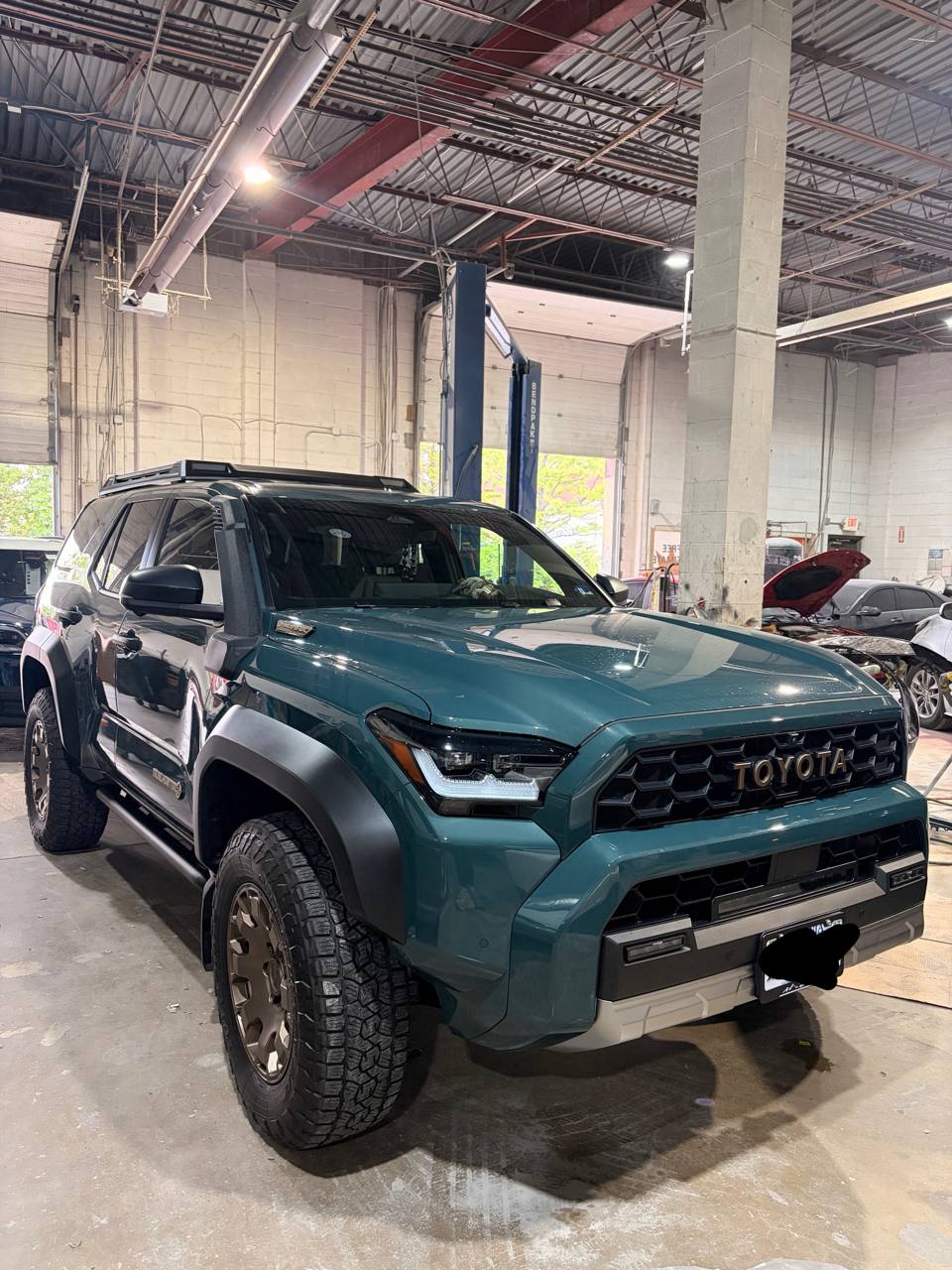
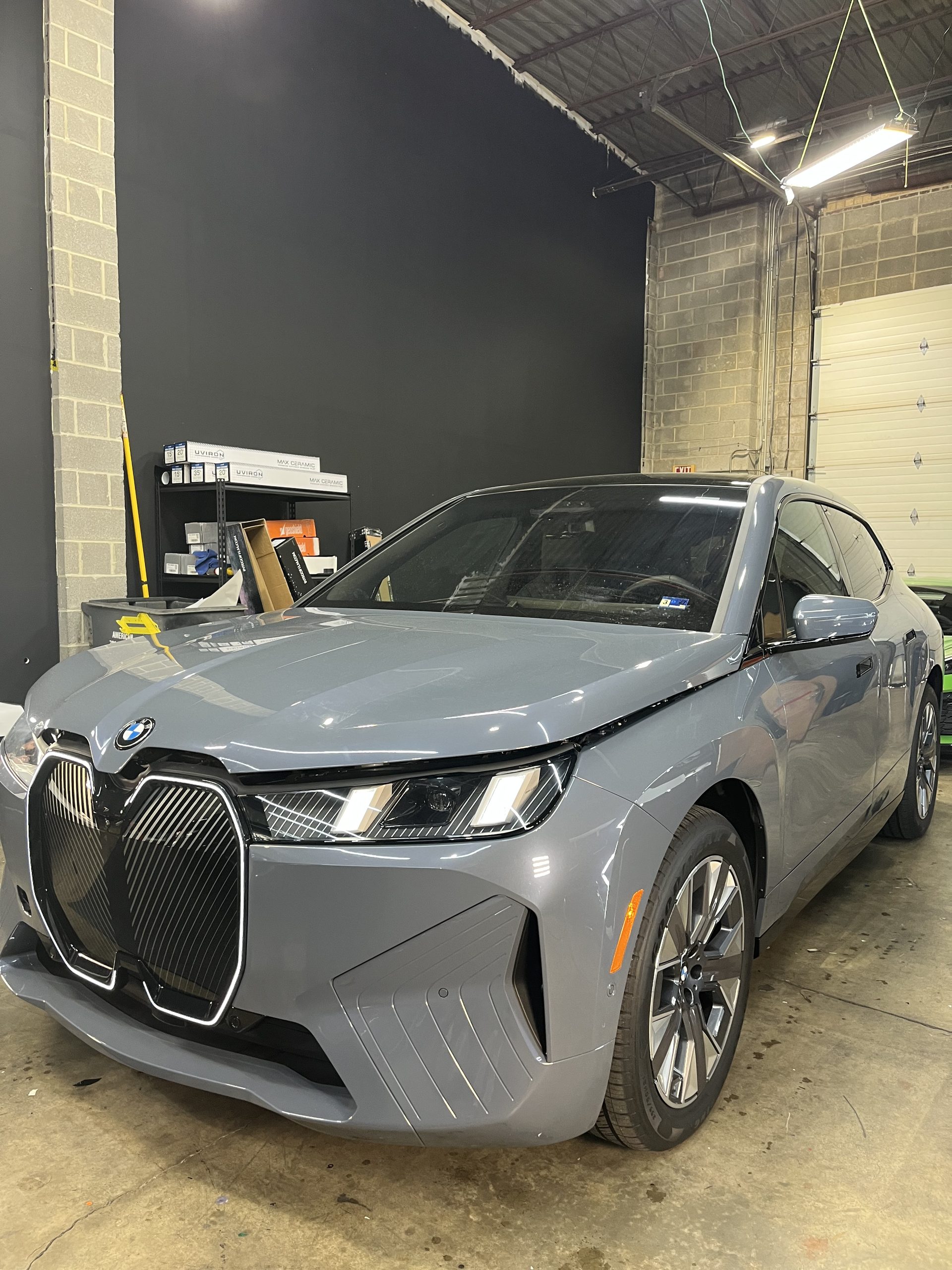
A tall SUV like a BMW iX has a flat front end and long rockers, so extended coverage makes the most sense there. A low sedan that lives on the Toll Road is usually well served by full front.
Get a quote before the first brine truck rolls
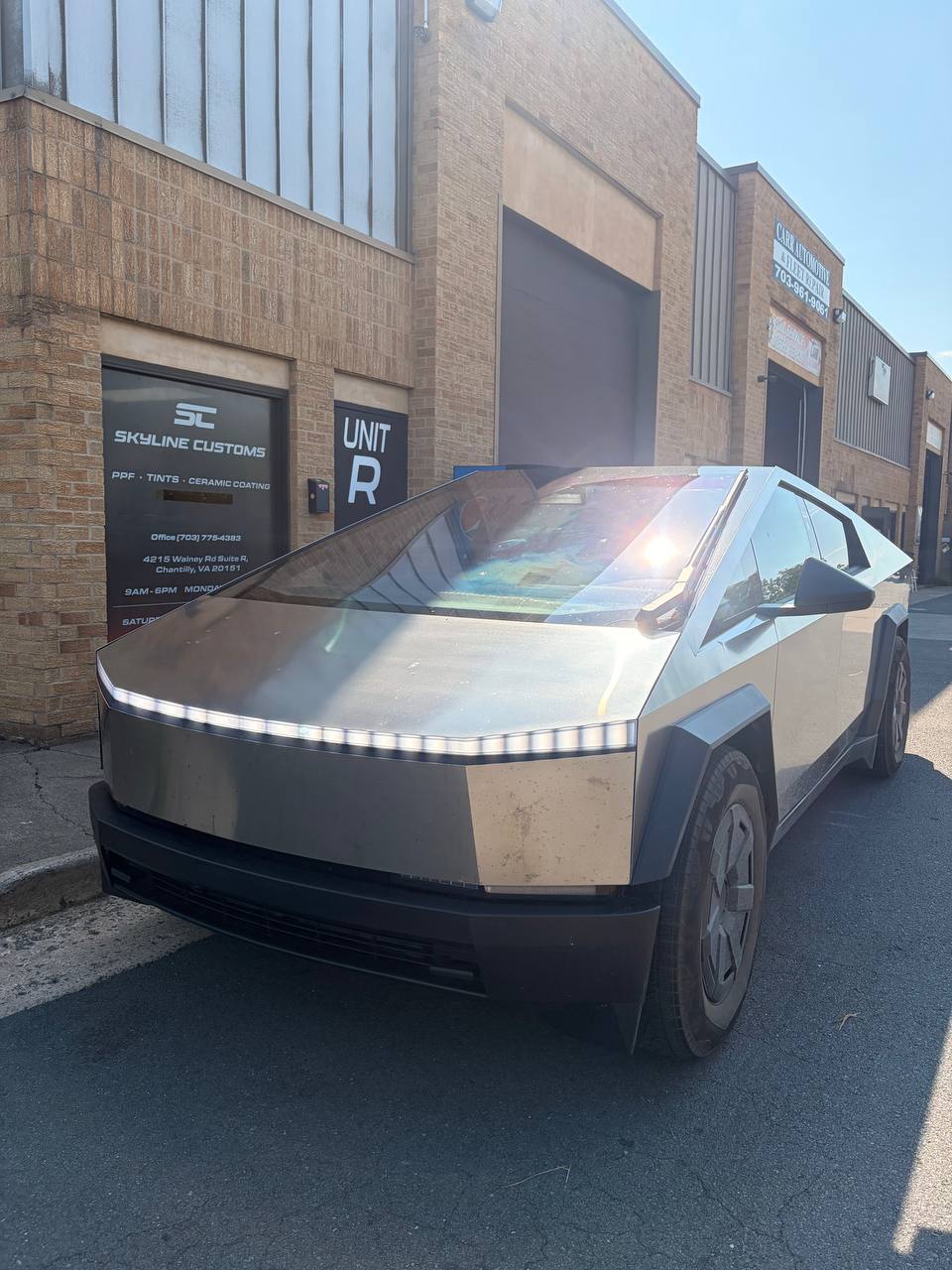
Winter is a good time to book. Every install at Skyline Customs happens indoors in a dust-controlled bay on Walney Road, so the temperature outside does not matter, and film that goes on before the first brine truck means the paint under it never meets salt at all. Plenty of customers from Reston, Ashburn, and Arlington book in November for exactly that reason. The only thing to plan around is the 7-day cure, so keep the car out of brush washes and away from pressure washers for the first week.
Skyline Customs installs STEK DYNOshield full front PPF in Chantilly, a few minutes off Route 28 and I-66, with STEK-certified technicians and a 12-year manufacturer warranty. Pricing depends on how much you cover and the size of your vehicle. Send the year, make, and model through the free quote form and we reply with an exact price, usually within the hour, or read how PPF is priced first. A fully refundable 20% deposit holds your install date, Klarna, Afterpay, and Affirm are available, and we serve the whole DMV, from Loudoun and Fairfax to Arlington, Bethesda, and DC.