Yes. Paint protection film is the only product that physically stops a rock chip, and the front of a car that commutes on I-66, Route 28, or the Dulles Toll Road is exactly where chips happen. Wax, sealant, and ceramic coating make a car easier to wash, but none of them is thick enough to absorb a stone thrown off a dump truck at 65 mph. Here is why the western Fairfax and Loudoun commute is so hard on paint, what the film actually does when a stone hits it, and which paint protection film package covers the panels that take the beating.
Quick answer
- PPF stops the chips you get from gravel, road grit, and construction debris at highway speed. It is a thick urethane layer that takes the hit instead of the paint.
- The bumper, hood, fenders, mirrors, and headlights take almost every chip on a DMV commute, so full front PPF is the package that matches the damage.
- Ceramic coating does not stop chips. It helps with washing and water spots, and it works best on top of film.
Why I-66 and Route 28 are so hard on a front bumper
Drive the stretch of I-66 between Centreville and the Beltway at 7:30 on a weekday and you are following dump trucks, concrete mixers, and flatbeds leaving the data-center and housing construction sites along Route 28 in Loudoun and western Fairfax. Every one of those trucks tracks gravel out of a job site and sheds it in the right lane. The express lanes and the shoulder work on I-66 add their own loose aggregate. Route 28 between Dulles and Manassas has the same traffic mix, and the Dulles Greenway and Route 7 through Sterling and Ashburn are no better.
At 65 or 70 mph a small stone leaves a tire with enough energy to break through clear coat and base coat in one hit. On a bumper cover, which is plastic, the paint cracks around the impact and the chip grows the next time the car goes through a touchless wash. On a steel hood, the chip exposes bare metal, and with a Northern Virginia winter of road salt behind it, that chip can start to rust by spring. This is the paint damage we see on almost every two-year-old car that comes into the shop in Chantilly, and none of it is the driver's fault.
What the film actually does when a stone hits it
STEK DYNOshield is a clear urethane film roughly eight thousandths of an inch thick, which is several times thicker than a factory clear coat. It bonds to the paint with a pressure-sensitive adhesive. When a stone hits the film, three things happen in a fraction of a second:
- The urethane compresses and spreads the impact across a wider area, so the energy that would have punched a hole in the paint is absorbed by the film.
- The surface of the film may show a small mark or a dent. Because the top layer is self-healing, light marks relax out in the sun or with warm water.
- The paint under the film stays intact. If a hit is severe enough to cut the film, the film is replaced, not the paint.
A rock chip on film is a free fix with warm water. A rock chip on paint is a body shop bill and a repainted bumper that never matches quite right.
That last point is the whole case for PPF on a daily driver. Repainting a bumper or hood costs real money, takes the car off the road, and a repainted panel is worth less on trade-in because dealers check for it. Film keeps the factory paint factory.
Which panels take the chips
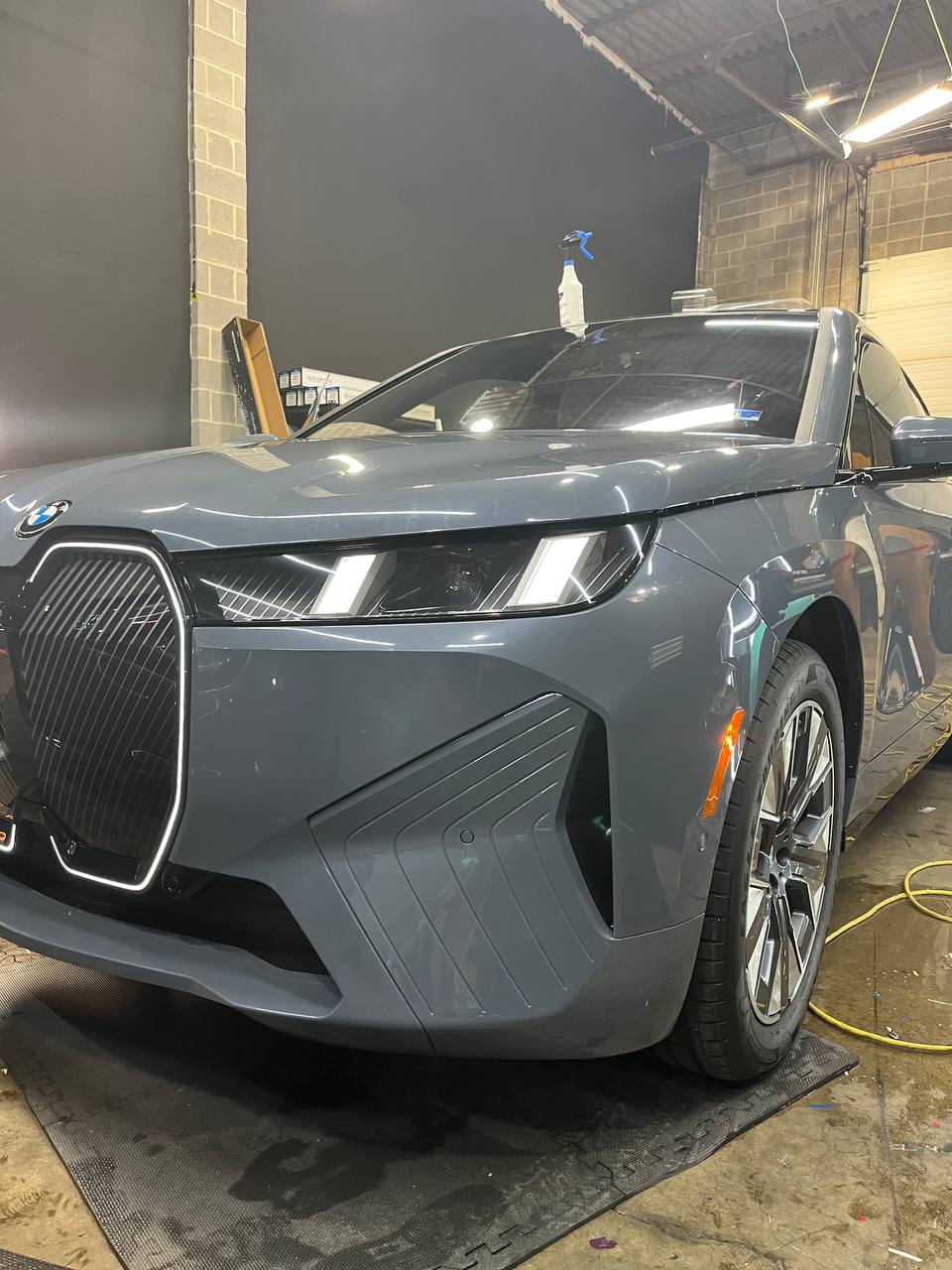
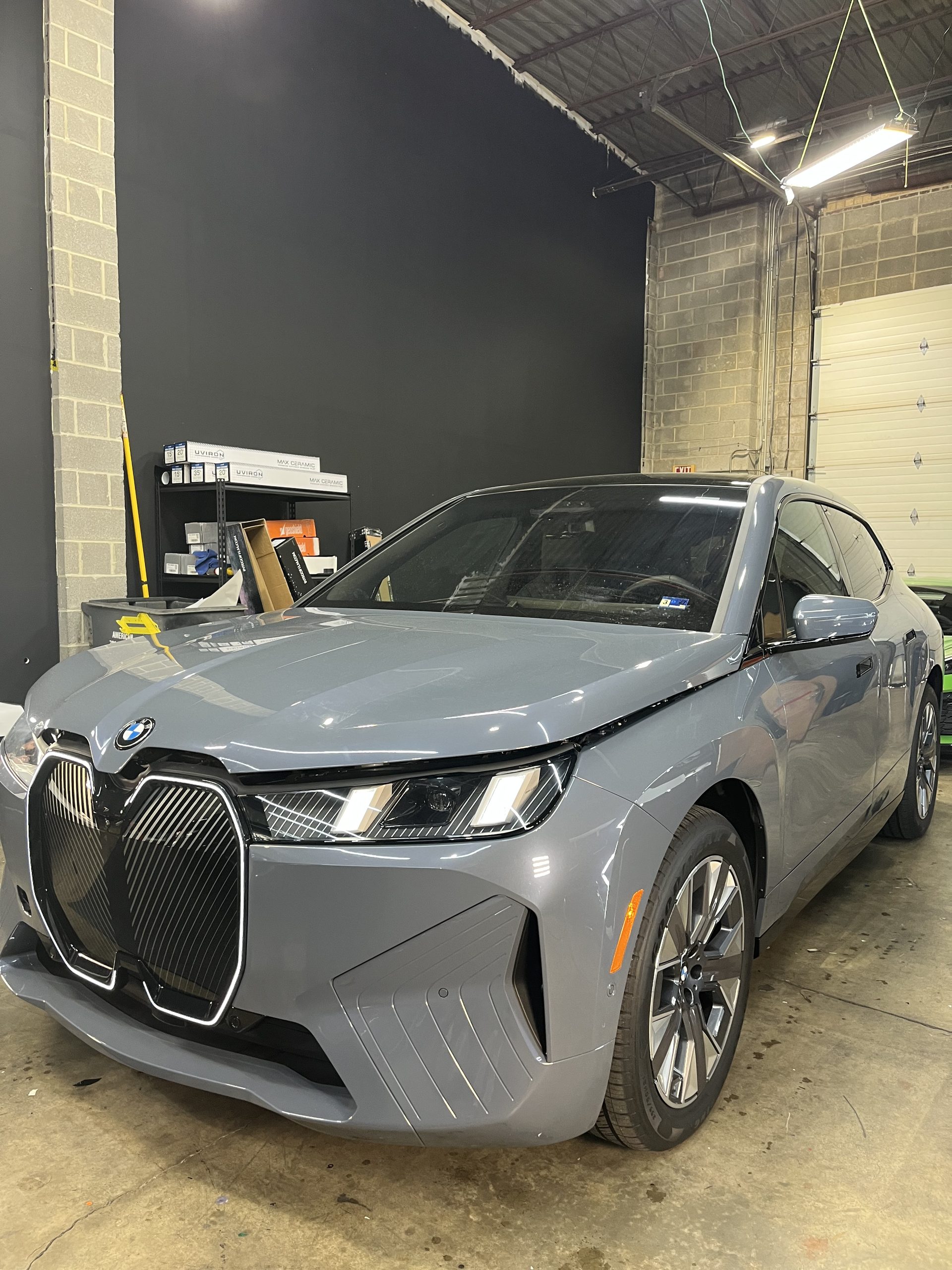
We photograph a lot of front ends before we film them, and the pattern is the same car after car. The damage lands on the panels that face forward and sit low:
- Front bumper, especially the lower half and the corners that stick out past the grille.
- Hood, concentrated on the leading edge and the center where the airflow carries debris up and over.
- Fenders, right behind the front wheels, where the tires throw stones backward and sideways.
- Mirror caps, which stick out into the airstream and collect pitting.
- Headlights, which pit and haze from sand and grit, not just stones.
That list is exactly what the full front package covers: the full hood, the bumper, both fenders, the mirrors, the headlights, and the A-pillars. The partial front package covers the bumper, the leading 18 inches of the hood, the fender edges, and the mirrors, which is a solid start for a car that mostly sees surface streets in Fairfax or Vienna. For a car that lives on I-66, Route 28, or I-95 through Springfield and Woodbridge, the chips land past that 18-inch line, which is why full front is what most of our commuters choose. If you also take the car on gravel roads out toward Haymarket or Warrenton, full front extended adds the rocker panels and door edges that catch what the front tires throw.
Trucks and SUVs are not immune
A taller vehicle has a taller, flatter front end, which makes it a bigger target. A Toyota 4Runner or a Ford Bronco that spends weekends on fire roads comes back with the same chips as a commuter, plus pitting along the lower doors. Tesla owners should know that Tesla paint is on the thin side, and a Model Y hood will show chips faster than most.
Why ceramic coating alone will not stop a chip
We get this question every week, so it is worth being direct. A ceramic coating is a liquid that cures into a glass-like layer measured in microns. It is excellent at what it does: water beads off, bugs and road film wash away with a rinse, and the paint stays glossier between washes. It is not thick enough to absorb an impact. A stone goes through a ceramic coating and into the paint as if the coating were not there.
The right way to think about the two is in layers. Film stops the chips. Coating on top of the film keeps the film clean and makes the self-healing surface work better because grit does not stick to it. That is why the shop pairs Gtechniq Crystal Serum Light or Crystal Serum Ultra with most PPF installs. If you are weighing the two, read PPF vs. ceramic coating for the full comparison.
What a chip-proof front end looks like after the install
A computer-cut STEK pattern for your exact year and model means the film covers the whole panel with edges tucked or wrapped where the pattern allows, so there is no hand-cut line across the hood. Under the lights at pickup you have to look for the film to find it. Twelve months later, after a winter of salt and a summer of construction traffic, the front of the car still looks like the day you drove it off the lot. STEK backs the film with a 12-year manufacturer warranty against yellowing, cracking, peeling, and delamination, and the shop stands behind the install.
Every install starts with a decontamination wash and paint inspection, so if your car already has a chip or two, we talk about it before the film goes on. Film cannot hide an existing chip, but it will keep it from spreading and stop new ones from joining it.
Get a quote before the next truck pulls in front of you
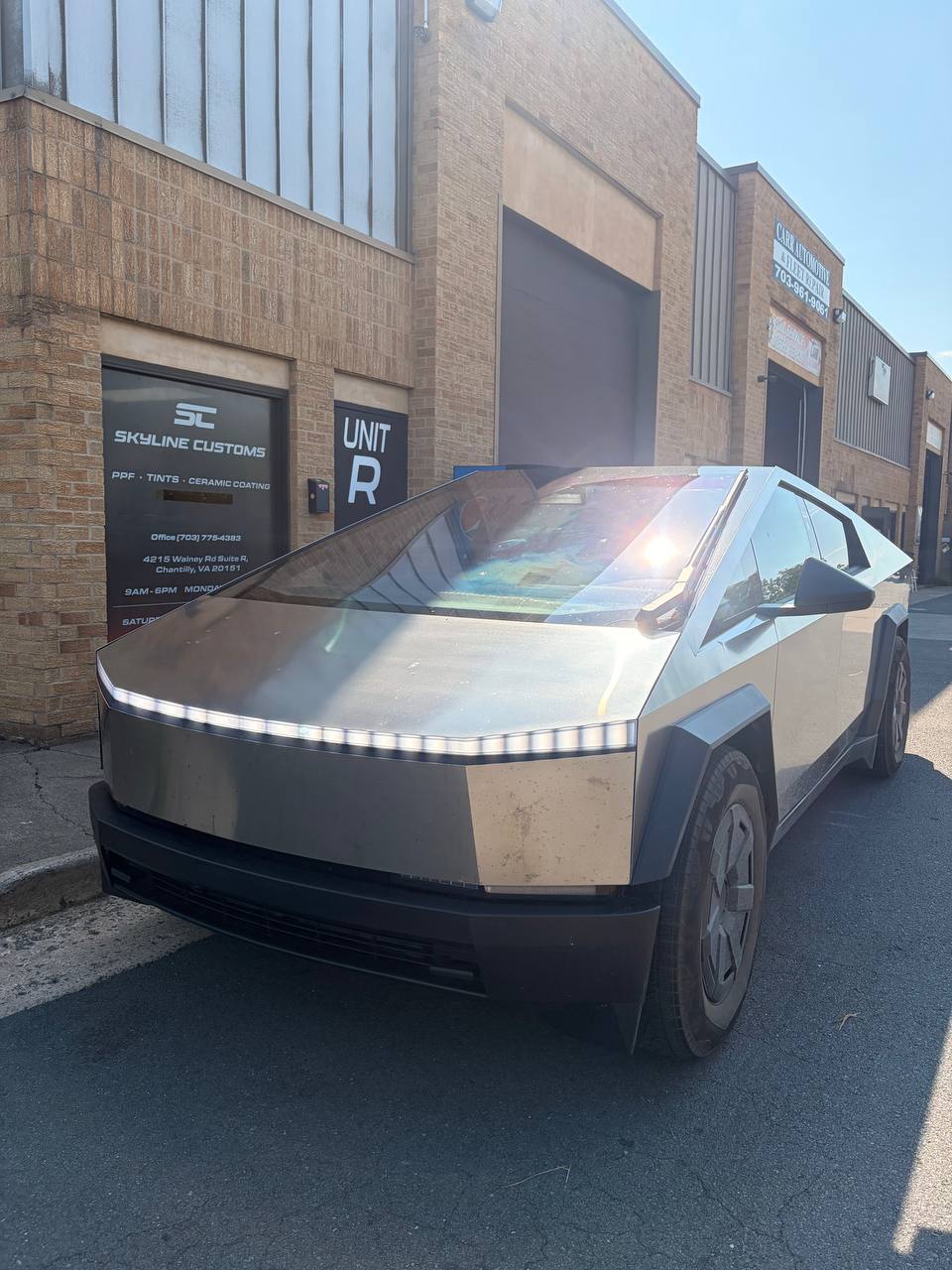
If you commute on I-66, Route 28, Route 7, or I-95, the question is not whether you will get chips but how many. Skyline Customs installs STEK DYNOshield full front PPF in Chantilly, a few minutes off Route 28 and I-66, with STEK-certified technicians in a dust-controlled bay. Pricing depends on your vehicle and the coverage you choose, and we reply to a free quote with an exact number, usually within the hour. Send the year, make, and model through the free quote form, or see what the finished work looks like in the gallery. We serve the whole DMV, from Centreville and Ashburn to Arlington, Bethesda, and DC. A fully refundable 20% deposit holds your install date, and Klarna, Afterpay, and Affirm are available if you want to split the cost.