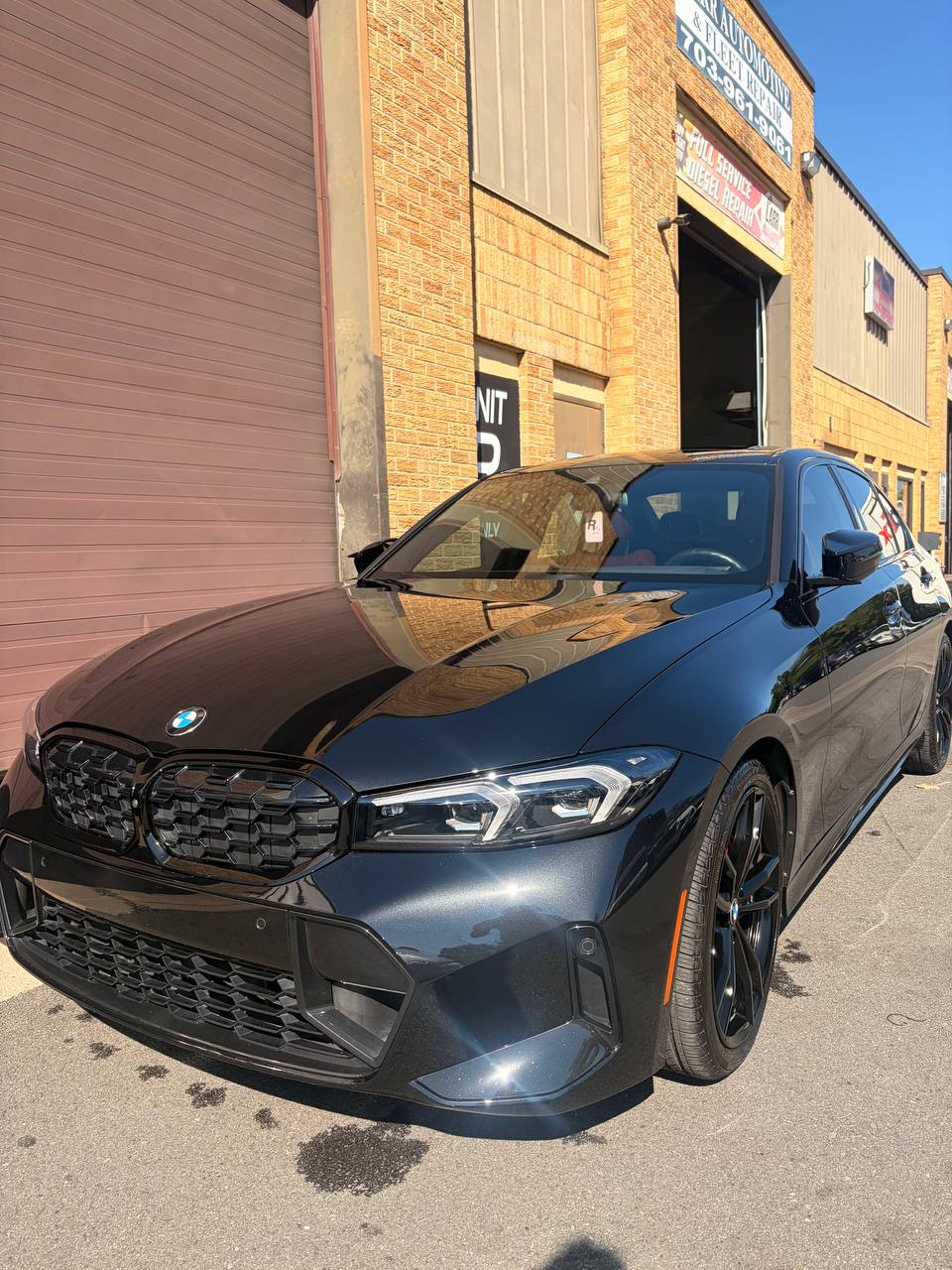
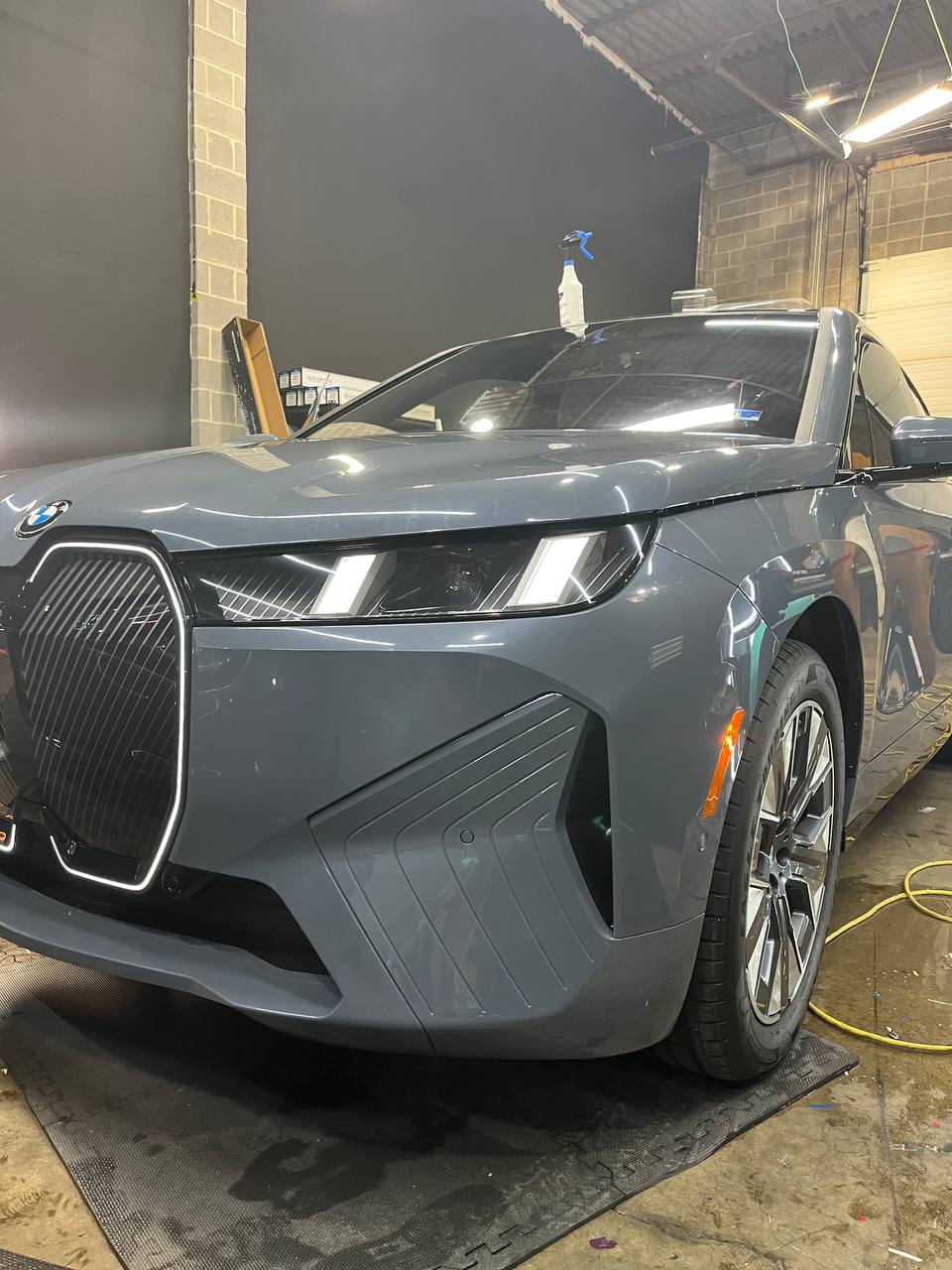
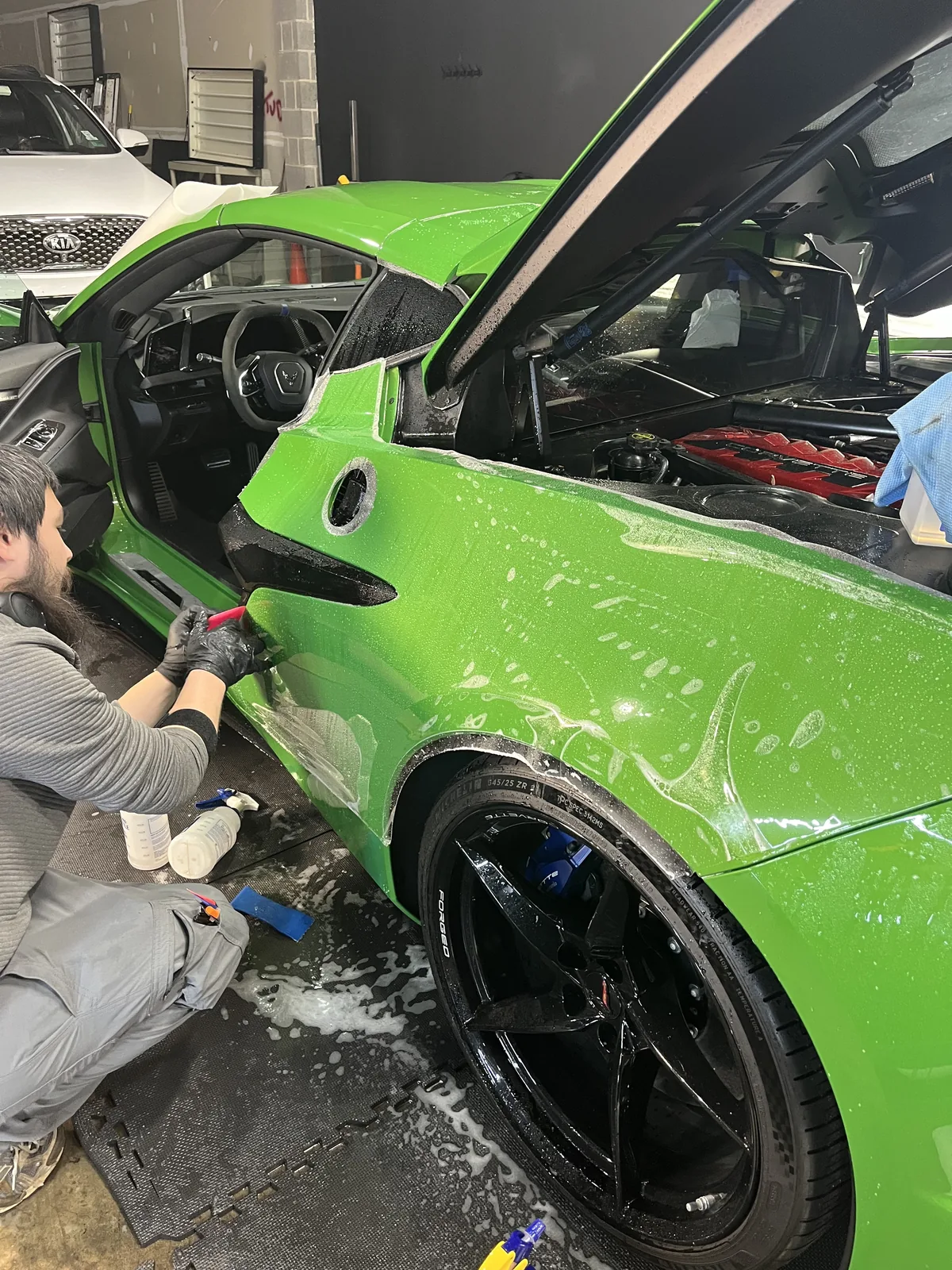
You can wax a car with PPF, but you should not need to, and most waxes do the film more harm than good. STEK DYNOshield already has a glossy, self-healing top coat, and a ceramic coating or a film-safe spray sealant protects that top coat far better than a tin of paste wax ever will. Here is what wax actually does on paint protection film, which products to keep away from it, and what we put on the film instead at Skyline Customs in Chantilly.
Quick answer
- Plain, dye-free, non-abrasive wax will not ruin PPF, but it builds up along the film edges and wears off in weeks.
- Cleaner waxes, colored waxes, and anything with petroleum solvents or abrasives can stain or dull the self-healing top coat.
- A Gtechniq ceramic coating over the film is the right way to add gloss: it lasts years, not weeks, and never leaves residue at an edge.
What wax does on paint protection film
Film is not clear coat. The surface you would be waxing is a thin thermoplastic urethane top layer that closes its own light scratches when it warms up in a Reston parking lot, and that layer is what gives DYNOshield its clarity. A plain carnauba or synthetic wax sits on top of it the way it sits on paint: it beads water for a few weeks and adds a hint of gloss, and on a hand-washed car it will not hurt anything. The problems show up in three places.
- Edges. Film has a physical edge on every panel, even when we wrap it under the hood lip and around the fender. Paste wax collects in that seam, dries white, and is tedious to remove without lifting an edge with a towel or a brush.
- Durability. Wax is soft. Strong touchless-wash detergents, summer heat on Route 28, and ordinary road grime strip it in a few weeks, so you are reapplying constantly for very little return.
- Chemistry. Many products labeled wax are really cleaner waxes with mild abrasives, dyes to tint the wax to your paint color, or petroleum distillates as a carrier. Abrasives scuff the top coat, dyes can stain it, and solvents can soften it. None of that is covered by any film warranty.
So the honest answer is the one on our FAQ: you can, but there is a better tool for the job.
Products to keep off the film
If you only remember one list, make it this one.
- Cleaner waxes and polish-and-wax combination products. The polishing agents are abrasive by design.
- Colored or tinted waxes. The dye is meant to fill chips in paint. On film it leaves a stain you cannot buff out.
- Rubbing compounds and heavy polishes. They can cut straight through the self-healing layer, and that damage does not heal.
- Solvent-heavy bug and tar removers and degreasers. A dedicated, film-safe tar remover is fine; a parts-store degreaser is not.
- Dish soap. It strips any sealant or coating and leaves the surface bare and dull.
- Wool pads and rotary buffers. A film-safe hand polish on a foam applicator is the most aggressive thing that should ever touch DYNOshield.
What we put on PPF instead
Every full front we install can be topped with a Gtechniq ceramic coating, and that is what we recommend on film. Crystal Serum Light is rated for five years and Crystal Serum Ultra for seven. The coating bonds to the DYNOshield top coat and to the bare paint on the rest of the car at the same time, so the hood, bumper, and fenders look and behave exactly like the doors and roof.
The coating does three things wax cannot. It is hard enough to shrug off the detergents in a touchless wash, so one application lasts through many winters of salt brine on I-66 instead of one. It is slick enough that spring pollen, the yellow coat that covers every car from Arlington to Ashburn in April, rinses off with a hose. And because it is a liquid that cures into a glass-like layer rather than a paste, it leaves nothing at the film edges.
Film stops the rock, the coating keeps the film clean. Wax does neither job as well as those two do together.
If you want a between-wash boost
A spray sealant sold as safe for coatings and PPF is the right product for a quick top-up after a hand wash. Spray onto a clean, dry panel, spread with one microfiber, buff with a second. It adds beading for a month or two, leaves no edge residue, and sits happily on a Gtechniq coating. It is the closest thing to waxing that we recommend.
If you already waxed your PPF
If it was a plain wax, the film is fine. Hand wash with a pH-neutral soap and use a soft detailing brush on any white residue at the edges, working away from the edge rather than into it. If it was a colored or cleaner wax and you can see hazing in direct light, stop using it and bring the car by. Light marks in the top coat often relax out with heat; anything deeper means a film-safe polish or, at worst, replacing a single panel of film.
A simple care routine that replaces wax
- Wait seven days after the install before the first wash so the film finishes curing and any remaining moisture under it evaporates.
- Hand wash with two buckets and a clean microfiber mitt, or use a touchless wash. No brush washes, ever.
- Let the sun do the healing. Light swirls and wash marks in DYNOshield close on their own in warm weather; a bucket of hot water speeds it up in January.
- Top up with a film-safe spray sealant every month or two if you want extra beading, or skip it entirely if the car is ceramic coated.
- Keep pressure-washer tips at least a foot back from any film edge.
That routine is why the paint protection film we installed on cars years ago still looks like it went on last month. A 2021 Nissan GT-R that came through our shop with full front film and Crystal Serum on top has never seen a wax pad, and it is one of the glossiest cars in our gallery.
Get the film and the coating done together in Chantilly
The answer to paint protection versus shine is both, in the right order: film first, coating on top. Skyline Customs installs STEK DYNOshield full front PPF and Gtechniq coatings in a dust-controlled bay at 4215 Walney Rd Suite 1A & B in Chantilly, VA, just off Route 28 near Dulles, with STEK-certified technicians and a 12-year manufacturer warranty on the film. Drivers come to us from across the DMV, and we hold a 5.0 Google rating with 140+ five-star reviews.
Pricing depends on the coverage you choose and the size of your vehicle, and we do not publish prices online. Send the year, make, and model through our free quote form and we reply with an exact price, usually within the hour. A fully refundable 20% deposit reserves your install date and goes toward the total, and Klarna, Afterpay, and Affirm payment plans are available. Skip the wax and let the film and the coating do their jobs.